Find Your Tile!
Luxury Vinyl Tile vs Porcelain Tile: The Complete Guide for Homeowners

Choosing between luxury vinyl tile (LVT) and porcelain tile for your next flooring project? You're not alone. These two popular flooring options each offer distinct advantages, but understanding their differences is crucial for making the right choice for your home or business.
Both materials have evolved significantly in recent years, offering impressive durability and aesthetic appeal. However, they serve different needs and budgets. This comprehensive guide will help you understand exactly what sets them apart and which option makes the most sense for your specific situation.

Understanding the Materials:
LVT vs Porcelain Tile

What is Luxury Vinyl Tile (LVT)?
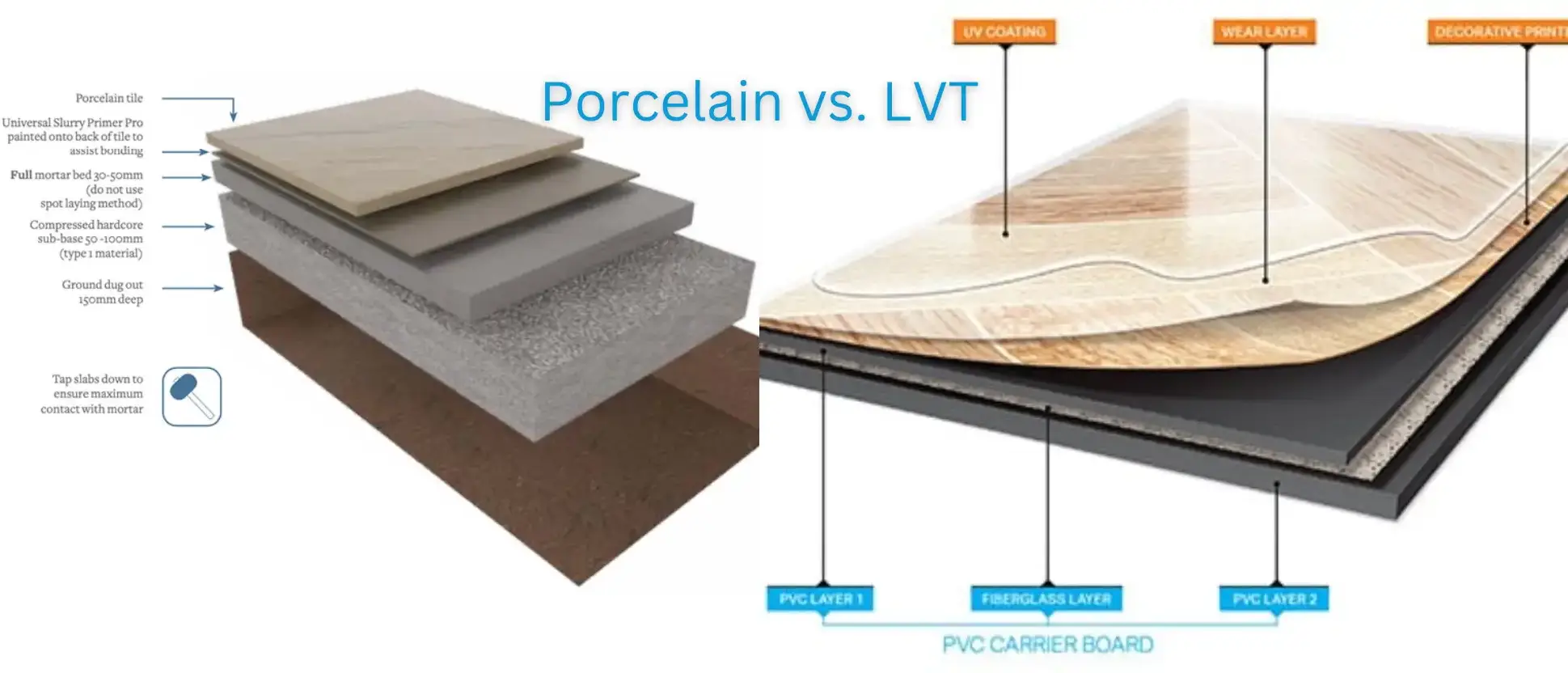
Luxury Vinyl Tile is a sophisticated synthetic flooring made of multiple layers working together to create a durable, attractive surface. The construction includes:
- Backing layer: Provides stability and structure
- Core layer: The foundation that gives the plank its strength
- Design layer: Features high-resolution printed patterns that convincingly mimic wood, stone, or other materials
- Wear layer: A clear protective coating that shields against scratches and stains
The wear layer thickness is measured in mils (thousandths of an inch) and is crucial for longevity.
While 12-mil wear layers are more budget-friendly, 20-mil and thicker options offer superior durability and longer lifespan.
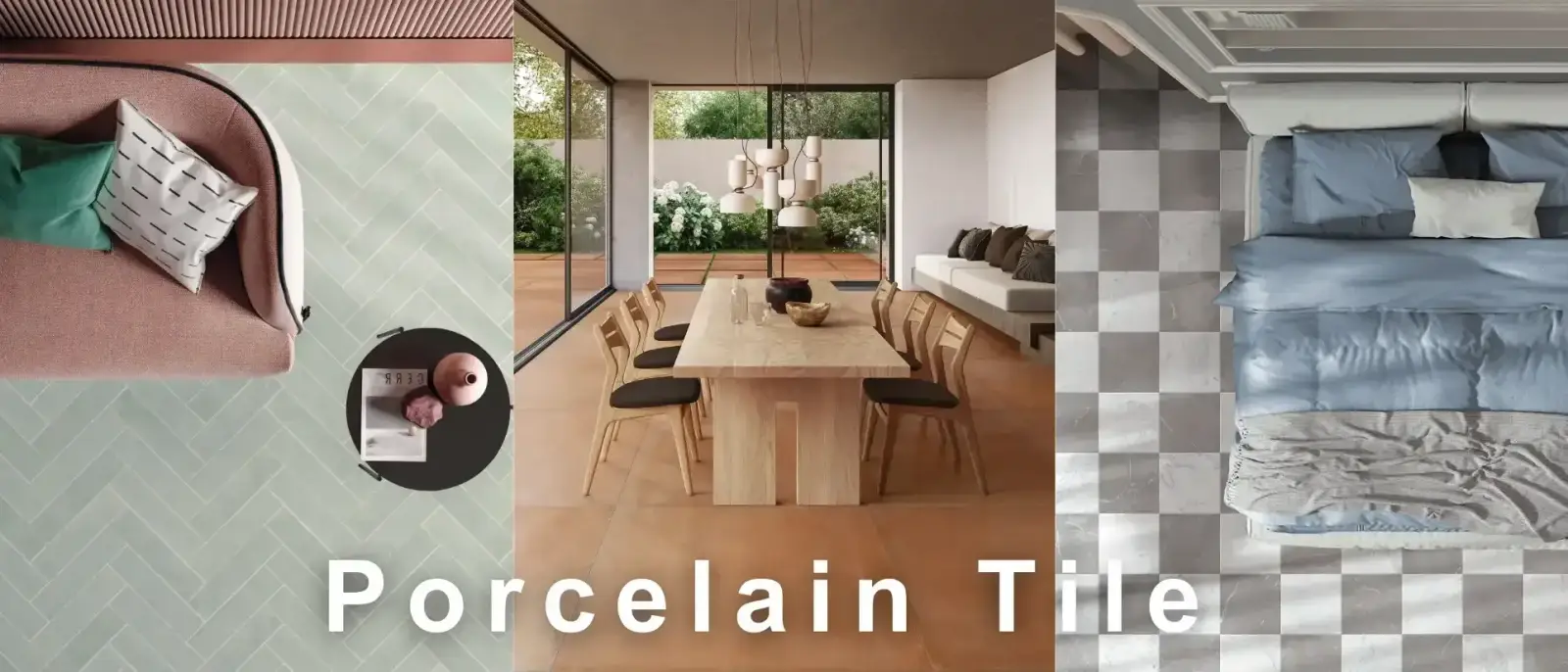
What is Porcelain Tile?
Porcelain tiles are crafted from the same clay mixture as ceramic tiles but undergo a more intensive manufacturing process. They're fired at extremely high temperatures — over 2,300°F — creating a dense, waterproof material that's incredibly durable.
Unlike LVT's wear layer system, porcelain tiles use the PEI (Porcelain Enamel Institute) rating scale from 1-5 to measure surface durability:
- PEI 3-4: Ideal for most residential applications
- PEI 4-5: Best for high-traffic commercial spaces
Modern porcelain technology allows these tiles to replicate virtually any material — wood, concrete, marble, metal, and more — with remarkable authenticity.
Where to Use Each Material
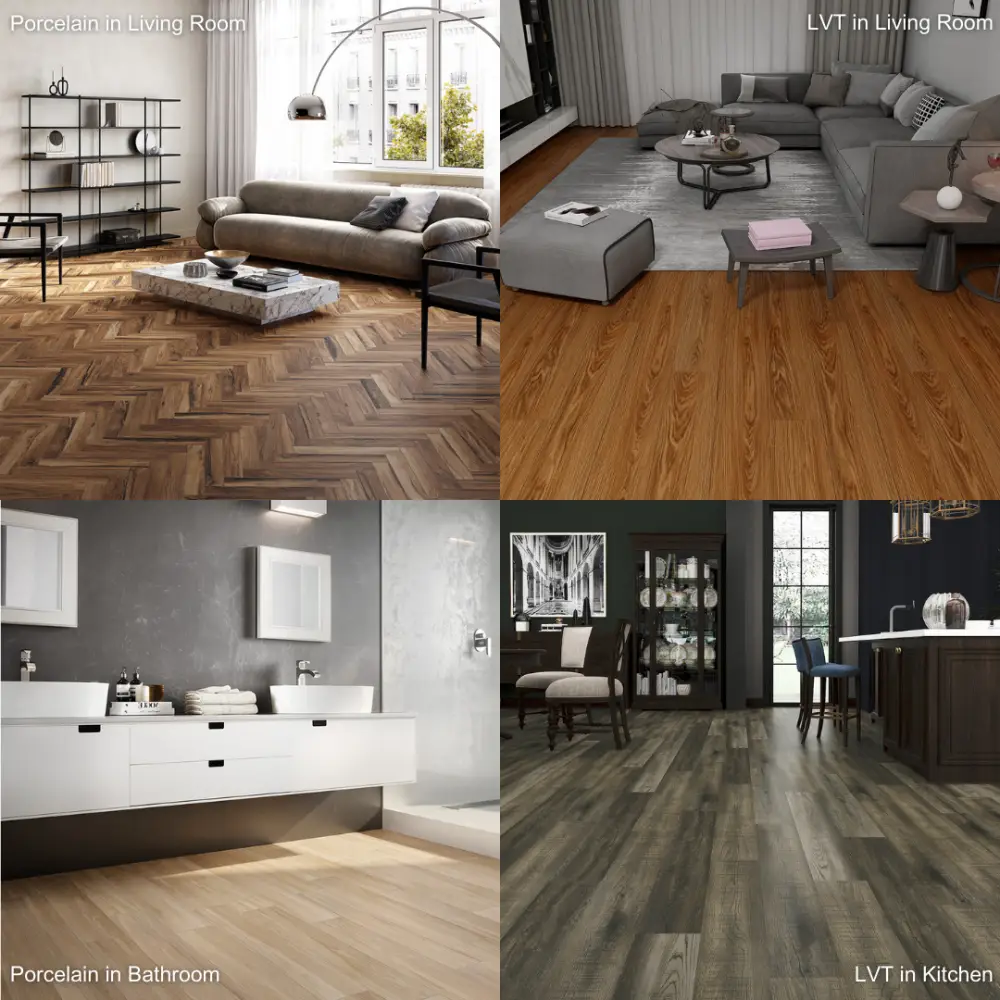
LVT Works Best In:
- Kitchens and dining areas
- Living rooms and bedrooms
- Commercial spaces like medical offices and retail stores
- Basements (in non-flood-prone areas)
- Renovation projects with height restrictions
- Areas where comfort underfoot is important
Avoid LVT In:
- Outdoor applications
- Garage floors
- Basements prone to flooding
- Areas requiring maximum longevity
Browse our complete LVT catalog to see specific options perfect for each of these applications.
Porcelain Tile Excels In:
- Any interior floor or wall application
- Bathrooms and wet areas
- Indoor and outdoor installations
- Sunrooms with intense UV exposure
- Floors with radiant heating systems
- High-traffic commercial environments
- Areas demanding maximum durability
Porcelain Considerations:
Porcelain doesn't have absolute "no-go" areas, but consider that it feels colder underfoot than LVT, which might influence your comfort preferences.

Cost Comparison:
Materials and Installation
LVT Costs:
Materials: $2-$7 per square foot (premium options can reach $8-$10) Installation: $3-$6 per square foot professionally
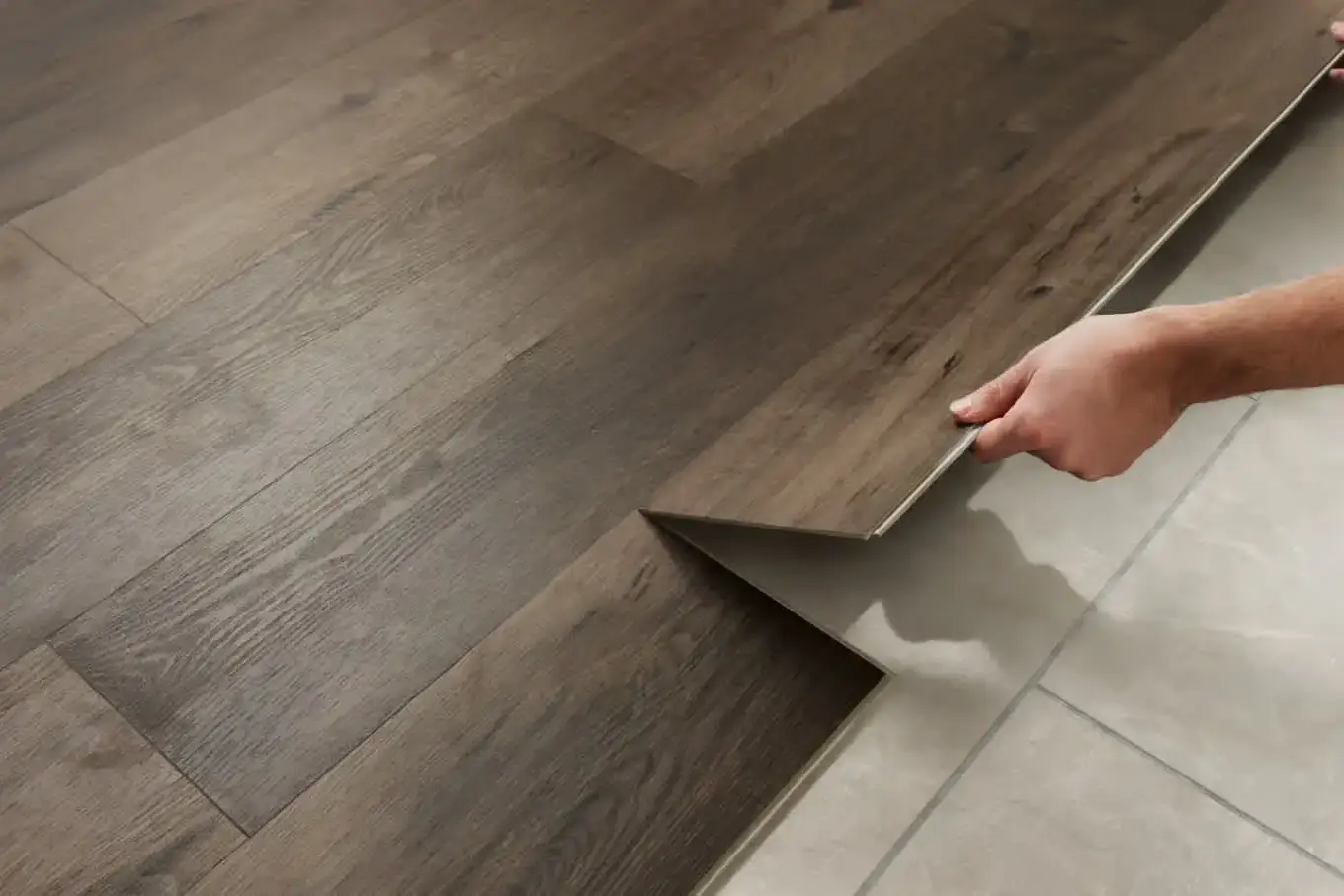
LVT uses a floating floor system where planks interlock via tongue-and-groove connections without being glued or nailed to the subfloor. This makes it:
- Easier and more cost-effective to install
- Perfect for DIY installation with basic tools
- Installable over most existing floors without demolition
See pricing and installation details for specific LVT products in our digital catalog.
Porcelain Tile Costs:
Materials: $2-$15 per square foot Installation: $10-$25 per square foot (may not include subfloor preparation)
Porcelain requires traditional installation where each tile is set in mortar (thinset) and individually placed, spaced, and grouted. This process:
- Creates a permanent bond to the subfloor
- Requires professional installation in most cases
- Demands specialty tools and expertise
- Needs a flat, level, structurally sound subfloor

Durability and Performance Comparison
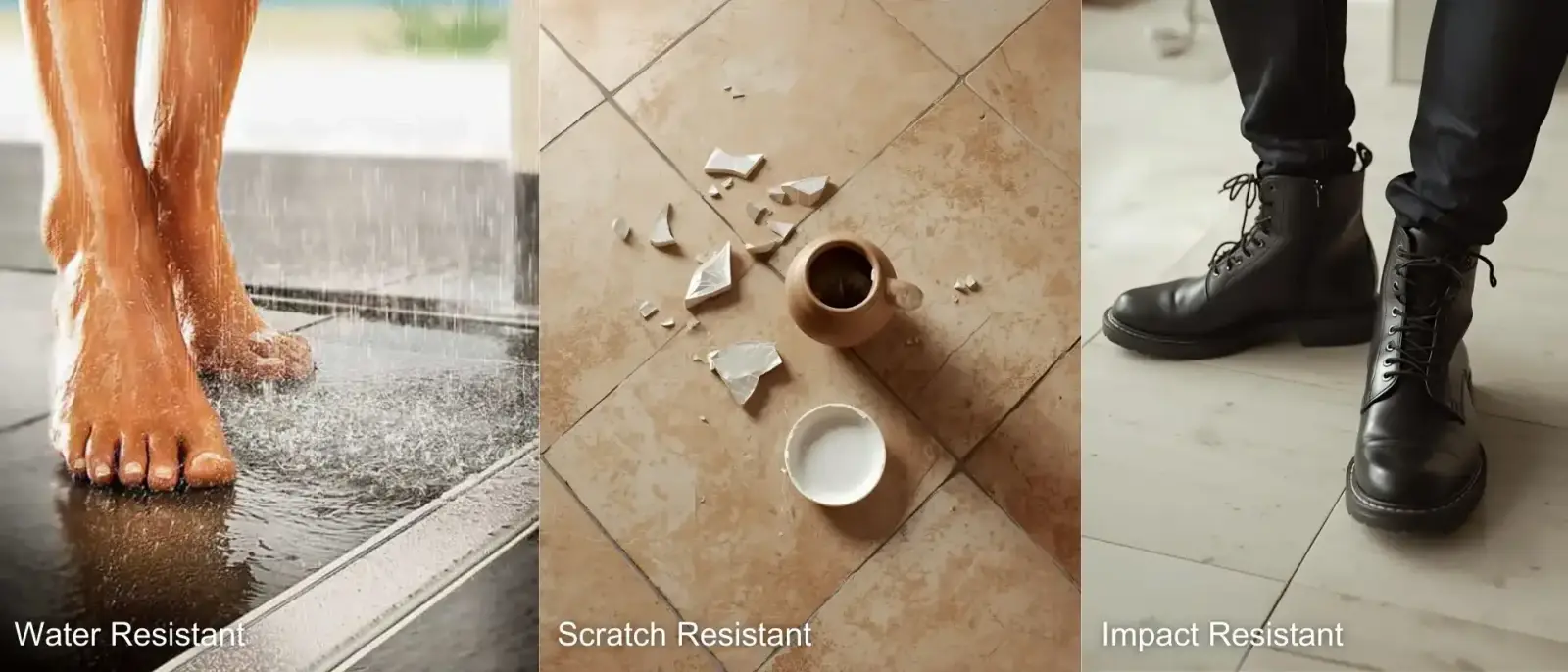
Water Resistance:
Both materials offer excellent water resistance, but with important distinctions:
- LVT: Water-resistant but not flood-proof; avoid in flood-prone basements
- Porcelain: Exceptional water resistance; grout requires proper sealing with standard grout types
Neither material will stain under normal use conditions.
Scratch Resistance:
- LVT: Depends on wear layer thickness (20-mil significantly outperforms 12-mil)
- Porcelain: Generally scratch-resistant, though polished black surfaces may show scratches more readily
Impact Resistance:
- LVT: Has some "give," rarely cracks when objects are dropped
- Porcelain: May chip or crack from heavy impact, though overall very durable
Longevity:
- Porcelain: 50+ years with proper installation and maintenance
- LVT: 10-25 years depending on quality and wear layer thickness
Comfort and Living Experience
LVT Advantages:
- Warmer underfoot without additional heating
- Cushioning effect reduces standing fatigue
- Better sound absorption, minimizing echoes and footfall noise
- More forgiving surface for dropped items
Porcelain Advantages:
- Solid, premium feel underfoot
- Cooler surface in hot weather
- Authentic material appearance and texture
- Superior luxury perception


Height Considerations for Renovations
This factor is often overlooked but critical in renovation projects.
Porcelain tile installation typically adds ½" to 1" in floor height due to the required mortar bed. This can create problems with:
- Door clearances
- Transitions between rooms
- Appliance fits, especially in kitchens
LVT can be as thin as 4mm (about 1/6 inch) and often installs directly over existing flooring. This makes it ideal for:
- Condo renovations with concrete subfloors
- Projects where maintaining existing floor heights is crucial
- Situations with tight clearance requirements
Design Options and Aesthetics
Porcelain Takes the Lead:
- Unlimited aesthetic possibilities: Can mimic metals, fabrics, exotic stones, marble, concrete, wood, and more
- Large format options: Available in slabs up to 4 feet by 9 feet or larger
- Advanced printing technology: Delivers sharper details and more realistic textures
- Premium perception: Generally viewed as more luxurious for resale value

LVT Offers:
- Improved realism: Modern LVT convincingly replicates wood and stone
- Limited size options: Typically maxes out at 9" x 60" for wood looks, 12" x 24" for stone patterns
- Good variety: Sufficient options for most design preferences
- Perception challenge: Even high-quality LVT may be viewed as less premium by some buyers
Explore the realistic wood and stone patterns available in our LVT collection to see the quality and variety for yourself.
Making Your Decision:
Which is Right for You?
Choose LVT If:
- Cost-effectiveness is important
- You prefer DIY installation
- Comfort underfoot is a priority
- You're renovating with height restrictions
- You want a warmer, more forgiving surface
Choose Porcelain Tile If:
- Longevity and maximum durability are top priorities
- You want unlimited design flexibility
- Resale value and luxury perception matter
- You have the budget for professional installation
- The project involves wet areas or outdoor applications
Ready to explore LVT options? View our complete LVT catalog to find the perfect style and price point for your project.
Quick Reference Comparison
Still trying to decide between LVT and porcelain tile? This quick-reference chart breaks down the key characteristics that matter most to homeowners and contractors. Each checkmark shows which flooring type excels in that category, making it easy to see at a glance which option aligns with your priorities.
Whether you're focused on budget, installation ease, long-term durability, or design flexibility, this side-by-side comparison will help you quickly identify which flooring solution is the best fit for your specific project needs.

The Bottom Line
Both LVT and porcelain tile are excellent flooring options with distinct strengths. Porcelain wins on durability, longevity, and design flexibility, while LVT excels in cost-effectiveness, installation ease, and comfort. Your choice should align with your specific needs, budget, and long-term goals for the space.
Consider factors like your home's resale plans, the room's usage patterns, your comfort preferences, and installation constraints. When in doubt, consult with flooring professionals who can assess your specific situation and provide personalized recommendations.
Ready to Choose
Your Perfect Flooring?
Whether you've decided on luxury vinyl tile for its comfort and affordability, or porcelain tile for its durability and design versatility, we're here to help you find the perfect solution for your space.
Explore Our Collections:
- LVT Options: Browse our extensive LVT catalog featuring realistic wood and stone patterns
- Porcelain Tiles: View our stunning collection of porcelain tiles in every style imaginable — from wood-look planks to marble slabs and contemporary designs — Our Tile Showroom
Visit our digital catalog or explore our online showroom to see hundreds of flooring options that combine beauty, performance, and value for your home renovation project!
Need Expert Guidance? Our flooring specialists can help you:
- Compare samples side-by-side
- Calculate materials and costs for your project
- Understand installation requirements
- Choose the right option for your specific needs
Follow us on social media for more flooring tips, installation guides, and design inspiration: https://linktr.ee/tilesunlimited
Want to stay updated on our latest flooring guides and trends? Sign up to receive email notifications and never miss our newest posts on everything from installation tips to design trends!
